
Vladimir Tismaneanu (born July 4, 1951, Brasov) is a novel set in the U.S. political scientist, professor of political science at the University of Maryland, College Park, USA, director of the Center for the Study of Post-Communist Societies of the same university. In 2006 he was chairman of the Presidential Commission for Analysis of Communist Dictatorship in Romania, and from 11 April 2007, President Presidential Advisory Commission for the Analysis of Communist Dictatorship in Romania. He was editor of East European Politics and Societies (1998-2004). Among his most recent works include "Stalinism for All Seasons" (University of California Press, Berkeley, 2003) and "Between Past and Future: The Revolutions of 1989 and Their Aftermath" (coordinated with Sorin Antohi, Central European University Press, 2000).
Articles and his studies have appeared in numerous newspapers and magazines, including New York Times, Washington Post, Common Knowledge, The New Republic, Partisan Review, Gazeta Wyborcza, Scope Policy, 22. Volume "revolutions of 1989. Between Past and Future "(Polirom, 1999) magazine awarded Best political sphere Romanian translation in the field. Romanian Cultural Foundation Prize (2001) and the prize "Ion IC Bratianu "(2001) for contributions to the promotion of liberal ideas. The Group for Social Dialogue Award for 2007.
Works: The Perfect Acrobat. Leonte Rautu, The Masks of Evil, co-Authored with Cristian Vasile (Bucharest: Humanitas Publishing House, 2008). A biography of Romania's Stalinist propaganda Czar, The Devil in History: Communism, Fascism, and the Lessons of the 20th Century (book contract with University of California Press, manuscript completed), The Mist Curtain. Co-Authored with Mircea Mihaies (Iasi and Bucharest: Publishing House Polirom, 2008), Refusing to Forget (London: Old Court House Publishing, 2007), Democracy and Memory: Essays on Communism, Fascism and Democracy (London: Old Court Publishing House, 2006), The Great Shock at the End of the Short Century. Ion Iliescu in Dialogue with Vladimir Tismaneanu - Social Science Monographs, distributed by Columbia University Press, 2004. New Edition, Social Science Monographs / Columbia University Press, 2006. Reviewed in Chronicle of Higher Education. Original Edition (London: Encyclopedic Publishing House, 2004). French translation, Ed du Rocher, 2004, The End and the Means: Essays on Ideology, Utopia, and Myth (London: Old Court House, 2004), Skeletons in the Closet. Co-Authored with Mircea Mihaies (Iasi and Bucharest: Polirom, 2004), Stalinism for All Seasons: A Political History of Romanian Communism. (Berkeley: University of California Press, 2003). Romanian translation, Polirom, 2005. Polish translation forthcoming. The book received the 2004 Barbara Jelavich Award from the American Association for the Advancement of Slavic Studies, Letters from Washington: Reflections on the Twentieth Century (Iasi and Bucharest: Polirom, 2002), Specters of Central Europe (Bucharest and Iasi, Polirom , 2001), Fantasies of Salvation: Democracy, Nationalism and Myth in Post-Communist Europe (Princeton: Princeton University Press, 1998. Romanian translation, Polirom, 1999, Polish translation, Muse Publishing House, 2001. Lithuanian translation, 2004. Major chapters translated in German, Ukrainian, Hungarian, Croatian. Recommended for the translation-publishing program, Open Society Institute, I Phantom of Gheorghiu-Dej: Studies in Romanian Communism (London: Universe Publishing, 1995), New Edition, Revised and Enlarged , Humanitas Publishing House, 2008, Reinventing Politics: Eastern Europe from Stalin to Havel (New York: Free Press, 1993). Paperback edition with new afterword to. Romanian translation of updated version (Iasi Polirom, 1997). Major chapters translated into Polish, Hungarian, German. Ukrainian translation, 2002, Reinventing Politics: Eastern Europe from Stalin to Havel (New York: Free Press, 1992). Cloth edition. Romanian and Ukrainian translations, In Search of Civil Society: Independent Peace Movements in the Soviet Bloc (New York: Routledge, 1990), editor and principal author, Crisis of Marxist Ideology is in Eastern Europe: The Poverty of Utopia (London and New York: Routledge, 1988).
1. Consider that today Romania is different from before 1989? From this perspective, we can talk from your perspective, a magistrate before 1989 and after 1989 one?
State prior to 1989 was one of the unjust (Unrechtsstaat), in which guilt is disguised as legal system. So it was not only different from the rule of law, but even opposite. Achilles heel of Romanian post-communism was the continuation of authoritarian practices inherited from the old regime, perpetuating the features of compromised people, connected by wires visible and invisible nomenklaturista caste. Which does not mean that nothing has changed. There were reforms in justice, especially during the ministry of Valeriu Stoica. There is now a body of magistrates which may be necessary critical mass for the final break with the Iliescu, including to the methods specific clientele a political body that suffers from endemic corruption.
2. Should be overlooked magistrates collaborating with the security services, given the accumulated experience and competence (knowing that a good specialist form in many years) or should these people be exposed and removed from the profession? Solution in East Germany, where, after the fall of the wall and reunification, the judges were removed from the communist period, is the best?
I am in favor of maximum transparency, support lustration law (obviously rational thought, not-omnibus package that can be easily stopped too technicist reasons). Working with security not of the obligations described, so to speak, the job description should be punished accordingly. Magistrate moral credibility crumble when you know that he was an accomplice of evil, he hid it, counting on the good faith of the citizens. Not everyone poured out, not everyone has prostitutes.
3. Consider that today, in the world and in Romania, the political power exercised influence or control over the magistrates? In what way? By the levers?
Separation of powers is the cornerstone of a viable democracy. Political influence is exercised through informal channels, through networks of collusion, influence peddling, assignment of privileges, etc. .. Romania needs perhaps what Italy has lived in the 90's: a "revolution" of the magistrates. I believe that strengthening the rule of law is a pro rata of the second term of President Traian Basescu.
4. If you should ask a court in Romania, to protect your rights, you have confidence in the system, in general, and judge, in particular? Is there any difference between what should be a judge and what he is, in reality?
I asked about the horrible calumnies launched against me by Gheorghe Funar, the leader of the "Romania Mare" (claimed to have embezzled secret documents during work on the Presidential Commission report analysis of communism and that I "sold hard money "in the United States of America). Stoica and company are the associates. We won in the first instance, the District 1 Bucharest, in 2007. They filed an appeal, now the process is retried. So we have proved by their action as I trust the legal system. Can be frustrated by the delay, but I'm sure the truth will prevail.
5. What counted that should do the members of this professional body to strengthen the independence and public confidence in the act of justice? How should a judge to act? He was born judge it ideal?
Also expect ideal judge, and he too can be here, near us. Do not fall into a kind of pessimism that would make us believe that all is vain. No, I really think it depends on a few people to create a difference. So always start big changes. Every judge who refuses to live a lie to strengthen the chances that most magistrates will want to live in truth.
Tismaneanu
Quote of the day
Personalities
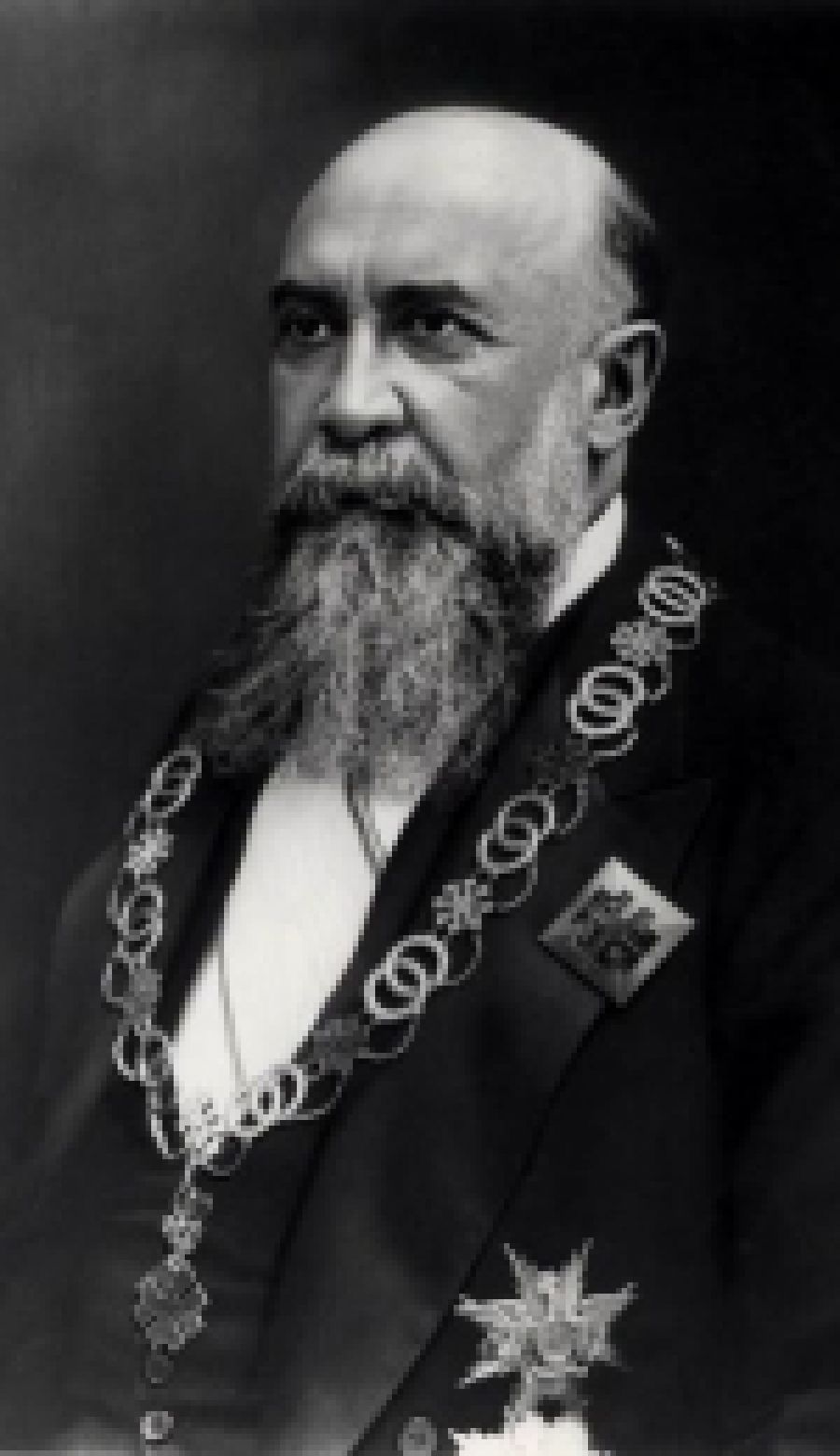 Nicolae Iorga
 was a historian, literary critic, playwriter, poet, minister,Prime Min ...
citeşte mai mult →
Nicolae Iorga
Nicolae Iorga was a historian, literary critic, playwriter, poet, minister,Prime Min ...
citeşte mai mult →
Interviews
 EBRD HORASANGIAN
Bedros Horasangian (born November 18, 1947, Bucharest) is a novel writer and ess ...
citeşte mai mult →
EBRD HORASANGIAN
Bedros Horasangian (born November 18, 1947, Bucharest) is a novel writer and ess ...
citeşte mai mult →
Editura Universitară, accredited publisher
- Bd. Nicolae Bălcescu nr. 27-33
- Sector 1, Bucureşti
- Cod poştal 010045
- 021.315.32.47
- 07217 CARTE
- 0744 EDITOR
- 0724 EDITOR
© 2005 - 2025 Editura Universitară. All rights reserved.